- 01Hazard?Stop the checklist; seek appropriate help.
- 02Home getting colder?Seek a system check; possible defrost does not rule out a problem.
- 03Context uncertain?Record observations. Do not diagnose from a timer or image.
When to stop and get help
If there is smoke, fire or immediate danger, leave the area and contact emergency services from a safe place. U.S. Fire Administration guidance says to get outside and call 911; read its home-fire guidance. Do not go to the thermostat to experiment with another heat source.
A burning electrical smell or repeatedly tripping breaker warrants qualified help. Do not open panels or repeatedly reset a breaker. CPSC identifies these as electrical warning signs. If the home is continuing to lose heat, seek help and make an appropriate plan for keeping occupants warm; this website cannot assess the property or the urgency for a particular person.
Ice, vapor and defrost
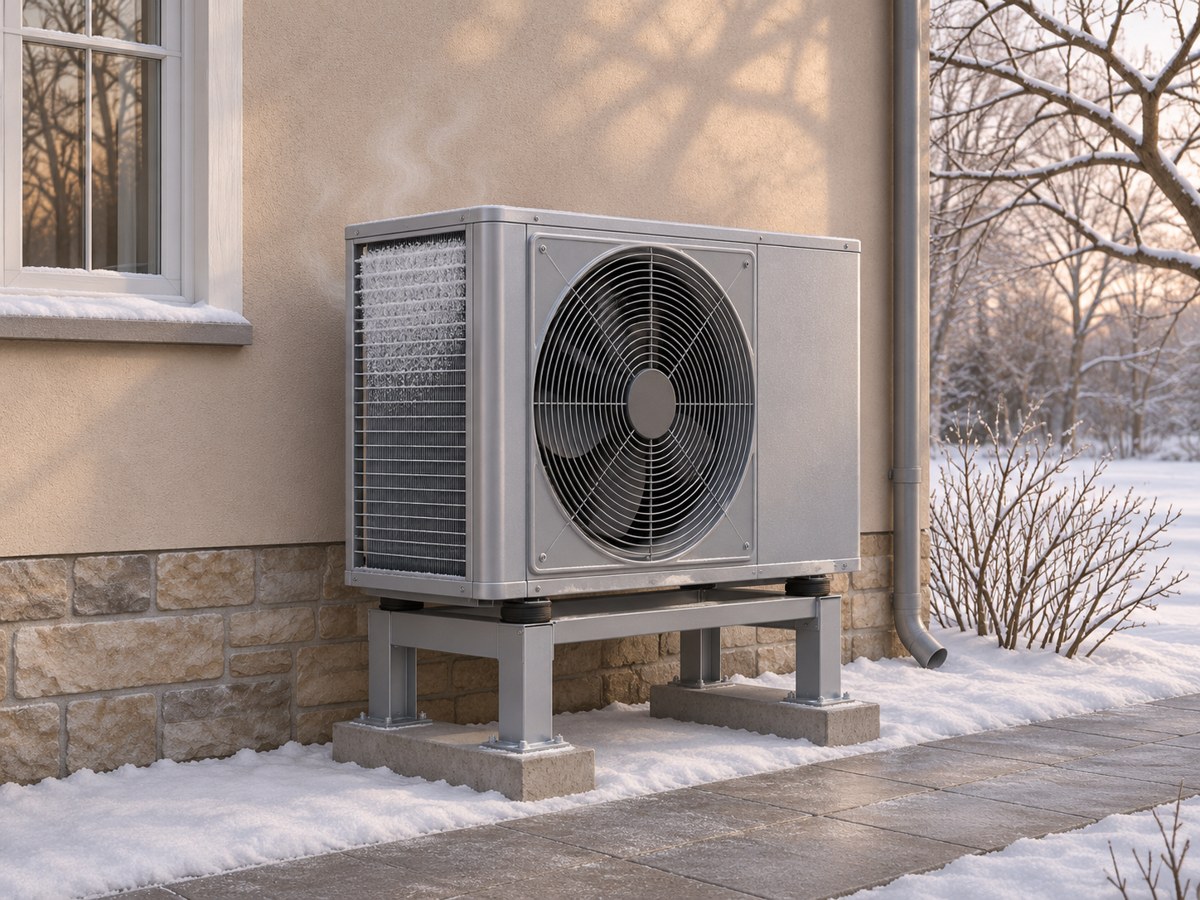
The DOE/BSESC homeowner guide explains that heat pumps defrost outdoor coils; supplemental heat may cover a ducted system’s heating gap, while a ductless head may briefly put out cooler air. Trane’s not-heating guide also describes cool air during defrost and resumption of heating afterward.
Cycle timing and controls depend on the equipment and conditions. Follow the equipment-specific guide rather than waiting for a universal countdown. Persistent ice, loss of indoor heat or a warning warrants attention even when defrost is possible. Vapor or frost alone cannot prove that an event is normal, and an illustration cannot distinguish harmless vapor from a hazard at your property.
Safe observations before changing settings
- Read the mode. Note Heat versus Emergency Heat, the target temperature and any alert. Do not assume Emergency Heat was chosen by mistake.
- Watch the indoor trend. A system that is holding its target differs from a home that continues getting colder. A setpoint increase does not rule out a problem.
- Note fan operation. Trane explains that an On fan can circulate air between heating calls. Check your model’s normal fan instructions; do not change installer ventilation or humidity controls based on this summary.
- Keep maintenance within the user guide. A dirty filter can restrict airflow, but this website does not infer a dirty filter from cold air. Follow the manufacturer’s cleaning/replacement instructions only for user-accessible parts.
Why a silent unit is not a diagnosis
A compressor can be intentionally locked out by a configured control, including Emergency Heat. Silence at one moment does not prove failure. Conversely, a visible running fan does not prove that the compressor, refrigerant circuit or backup heat is operating correctly. Record the pattern and ask a professional when heat is not maintained; do not test contactors, wiring or refrigerant yourself.
Aux on with cold air
Aux on a display is not a measurement of heat output or energized strip power. Persistent cold air and a colder home should not be reduced to “change the lockout,” nor automatically diagnosed as failed strips. The checklist prioritizes a reported hazard, continuing loss of indoor heat and persistent equipment observations over possible defrost or recovery explanations.
Use Aux versus Emergency Heat to understand modes, then the exact-model guides to identify terminology. These are educational references, not a remote repair diagnosis.