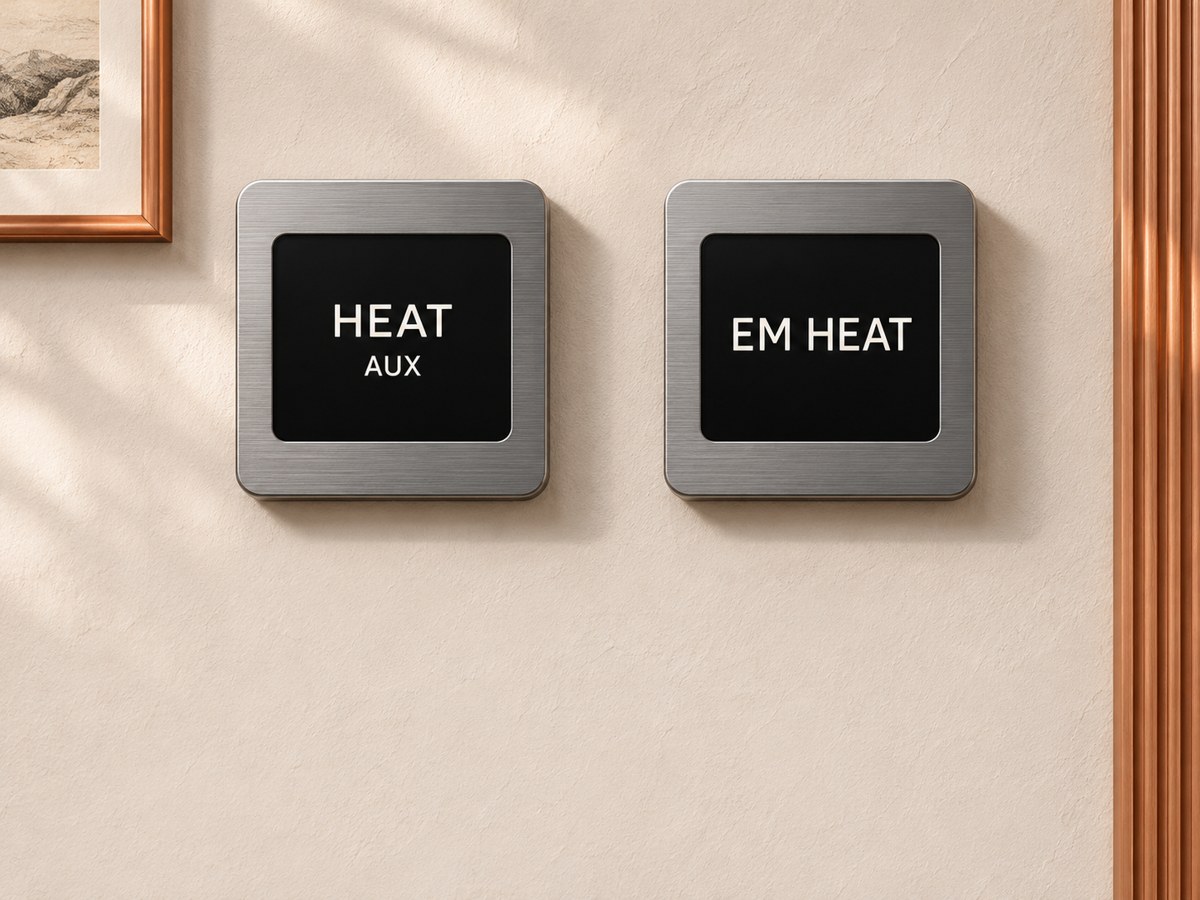
Heat mode
Heat pump permitted
Configured Aux may supplement as needed.
Emergency Heat
Heat pump locked out
Configured backup heat operates instead.
The two modes
In the Honeywell Home T10/T10+ configurations described here, Heat mode permits the heat pump to operate and can call on auxiliary heat. Emergency Heat is selected manually and locks out the heat pump, using configured backup heat instead. That does not establish that a component has failed, or that every thermostat uses identical labels.
Google’s Heat Pump Balance guide identifies cold conditions and defrost as reasons AUX can appear. A message is context, not proof that all equipment is working or a reason by itself to call for a repair. Pair it with the indoor-temperature trend and any persistent warning.
When to ask for help
If the home continues getting colder, the outdoor unit is not working as expected, ice persists or the system repeatedly reports a problem, ask a qualified HVAC professional to check it. These observations are listed in the DOE/BSESC homeowner guide; they are not enough to name a failed valve, refrigerant charge or compressor.
Emergency Heat may serve as temporary backup when the heat pump cannot operate and your manufacturer or technician confirms the backup is configured and safe to use. Do not treat it as a special mode you must select below a universal outdoor temperature. If a technician selected it intentionally, check with them before switching back.
Electric strips and other backup
Backup heat is not always electric resistance. Some systems combine a heat pump with gas or oil equipment. Fuel type and the installed controls affect whether sources run together or alternate. The DOE/BSESC controls guide distinguishes comfort-based control from an economic switchover calculated from fuels and rates. There is no universal setting to copy from this website.
The strip-cost calculator is only for electric strips. It computes power × rate × running time, excluding compressor and blower use. Ten kW at USD 0.16/kWh for one hour is USD 1.60; this deliberately hypothetical example is not the cost of operating a gas furnace or your entire heat pump.
A useful record for your technician
- Record the exact thermostat model and the full message, including whether it says Aux or Emergency Heat.
- Note when the message appears and whether indoor temperature holds, rises or continues falling. Avoid opening equipment to investigate.
- Record recent setpoint changes and outdoor conditions. A single outdoor reading does not determine a safe lockout.
- Ask which backup source is installed, whether the mode was intentional and which guide applies to the present configuration.
The T9 user guide provides an Emergency Heat example; Daikin One+ reference material also describes a configured aux-source mode. Their definitions explain the cited systems, not a universal retrofit instruction. Use the situation checklist to organize observations.